
Bankura terracotta at a glance
| Origin | Panchmura village, Bankura district, West Bengal (also Rajagram, Sonamukhi and Hamirpur) |
| Craft type | Hollow, wheel-thrown terracotta (fired clay) |
| Main materials | Fine red clay from local riverbeds, water, natural binders |
| Technique | Parts thrown on the potter's wheel, joined by hand, dried, fired in open kilns |
| Signature colours | Terracotta red; black when fired with the kiln vents closed |
| Known for | The stylised, long-necked Bankura horse |
| GI status | Registered Geographical Indication: "Bankura Panchmura Terracotta Craft" (28 March 2018) |
| Typical products | Horses in many sizes, elephants, deities, lamps, masks, wall plaques |
| Price range on KLAYVA | ₹[X]–₹[Y] [from live listings] |
| Good for | Home décor, gifts with meaning, collectors of Indian folk art |
| Care | Keep dry indoors, dust gently, handle by the body |
What is the Bankura horse?
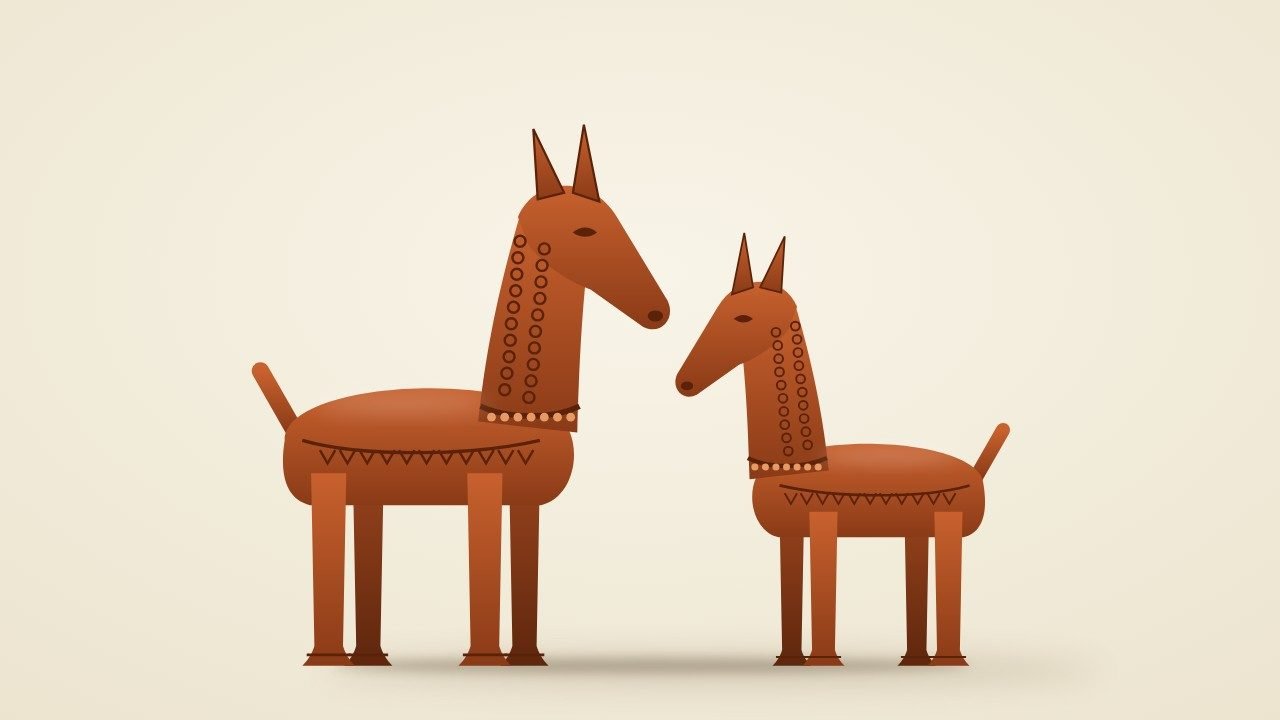
The Bankura horse is a terracotta horse made in Bankura district, West Bengal, and it's one of the most recognised shapes in Indian folk art. It stands tall and alert, with a long upright neck, pricked ears and a simple, rounded body, more a graceful idea of a horse than a realistic one.
The best-known Bankura horses come from Panchmura village. Potters there make them hollow, from separate pieces thrown on the potter's wheel, and join them by hand. Ears and tail are shaped separately and set into the body. The finished horse is fired to a warm red, or to black if the kiln is sealed.
Bankura's potters also make elephants, deities, lamps, masks and plaques. But the horse is the craft's signature, admired for its elegant stance and its simple, abstract form.
Where does Bankura terracotta come from? History and origin
Bankura terracotta comes from the potter communities of Bankura district in western West Bengal. Its horses were made for generations as offerings to village gods, especially Dharmathakur in the Rarh region, before becoming a symbol of Indian folk art worldwide.
Terracotta has a long history in Bengal, and Bankura district is also home to Bishnupur's famous terracotta temples [verify for page]. In village tradition, terracotta horses and elephants are offered when a wish is made or fulfilled, and are left beneath trees or at shrines on the edge of the village. In the Rarh region, where Dharmathakur is worshipped, horses of many shapes and sizes are gathered at his shrines, a practice particular to that deity.
Four villages became the main centres for horses and elephants: Panchmura, Rajagram, Sonamukhi and Hamirpur. Each developed its own style, and the Panchmura style is widely considered the finest. Over the centuries, potters moved away from realistic shapes toward the abstract, stylised form now known around the world.
In the 20th century the Bankura horse became a national symbol of Indian handicrafts. It has served as the logo of the All India Handicrafts Board [verify]. On 28 March 2018 the craft was registered as a Geographical Indication under the name "Bankura Panchmura Terracotta Craft".
How is the Bankura horse made?
The Bankura horse is made by throwing its legs, neck and face as separate hollow parts on the potter's wheel, joining them by hand, attaching hand-moulded ears and tail, drying the piece slowly, and firing it in a kiln to red or black.
- Prepare the clay. Fine red clay from local riverbeds is cleaned, soaked and kneaded with water.
- Throw the parts. On the wheel, the potter throws the separate parts: four legs, the neck in two sections, and the face, seven pieces in all.
- Join the body. The hollow parts are joined by hand to form the horse. Extra clay is added to smooth the joins and fix the shape.
- Add ears and tail. These are moulded separately by hand and fitted into grooves in the body.
- Make breathing holes. Once partly dry, small holes are cut so the inside and outside dry evenly. This prevents cracks.
- Dry slowly. The horse dries for about six or seven days in a closed room, then in the sun.
- Fire. Pieces are fired in the kiln. With the vents open, oxygen gives a red colour. With them sealed, the clay turns black.
- Finish. Some potters add white or black highlights. The raw terracotta surface is otherwise left as it is.
[Add 3–4 process photos from a KLAYVA artisan's workshop, with captions in their words.]
Materials, colours and motifs
Materials
- Fine red clay from local riverbeds
- Water and natural binders
- Tools: the potter's wheel, wooden moulds, carving knives and shaping sticks
Colours
- Terracotta red: fired in an open, oxygen-rich kiln
- Black: fired in a sealed, oxygen-poor kiln
- Occasional white or black painted highlights
Motifs and forms
- The long-necked horse, in sizes from a few inches to several feet [verify size range with artisans]
- Elephants
- Deities and ritual figures
- Lamps, pots and masks
- Simple incised patterns and geometric details
How to identify a genuine Bankura horse
- It's hollow. Look into the openings. A real Bankura horse is built from hollow wheel-thrown parts, not cast solid in a mould.
- You can see the joins. Look for gentle seams where legs and neck meet the body, and ears set into the head.
- Small breathing holes. These help the horse dry and fire without cracking.
- Natural colour. The red or black comes from firing. Glossy paint or varnish suggests a decorative copy.
- No two are identical. Height, neck curve and ear angle vary from horse to horse.
- A named maker from Bankura. On KLAYVA, every horse is sold by the potter who made it, and the listing names their village.
Bankura terracotta vs Gorakhpur terracotta
| Bankura Terracotta | Gorakhpur Terracotta | |
| Where | Panchmura and nearby villages, Bankura, West Bengal | Villages of Gorakhpur district, Uttar Pradesh |
| Signature piece | The long-necked Bankura horse | Decorated horses and elephants |
| Look | Smooth, stylised, abstract | Richly textured, with hand-applied ornament |
| Shaping | Wheel-thrown parts joined by hand | Mainly built and decorated by hand |
| Colour | Red, or black from sealed-kiln firing | Natural red, dipped in soda and mango bark |
| GI status | Registered (2018) | Registered (2020) |
Meet the makers of Bankura terracotta on KLAYVA
[Show this section once a Bankura artisan is live. Template per artisan:]
[Name], Panchmura, Bankura · [X] years in terracotta "[One line in the artisan's own words: who taught them, what the horse means in their village, or a step only they do.]" [Visit [first name]'s shop →]
[Artisan consent for name, photo and quote required.]
Shop handmade Bankura terracotta
Each piece below is thrown, joined and fired by hand in Bankura and sold directly by its maker. Every horse is made individually, so yours may differ slightly from the photo.
[Product grid. If fewer than 3 products are live, replace with:]
New Bankura terracotta is coming soon. We're welcoming our first potters from Panchmura. Join our list to see their work first. [Email signup]
Bankura horse gift ideas
The Bankura horse is a meaningful gift, long linked to wishes and good fortune.
- Housewarming: a pair of horses for the entrance or living room
- Weddings: a matched pair, red or black
- Diwali: small horses with terracotta lamps
- Corporate gifting: small horses with a card on the craft's story [confirm artisans can supply quantities]
- Collectors: a red and black pair, or horses in graded sizes
Why does a handmade Bankura horse cost what it does?
A Bankura horse is built from seven wheel-thrown parts, joined and finished by hand, dried for about a week and fired in a kiln. Some pieces crack in drying or firing, and large horses take much longer to make.
They also need careful packing to travel safely. When you buy on KLAYVA, the potter keeps [85%] of the sale price [confirm figure before publishing].
How to care for Bankura terracotta
- Keep it indoors or sheltered. Terracotta absorbs water and can crack in heavy rain or cold.
- Dust gently with a soft, dry brush.
- Lift by the body, never by the neck, ears or legs.
- Avoid harsh cleaners and soaking.
- Use a stable surface. Tall horses can tip if knocked.
- Not for food or water. These are decorative pieces.